
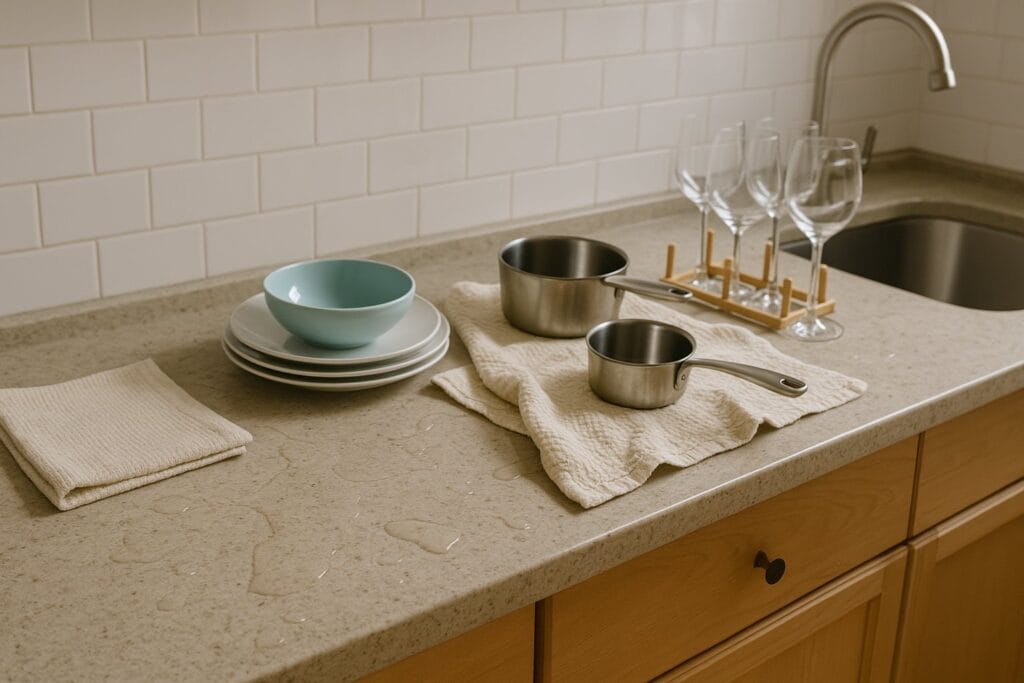
Imagine you just finished washing the dishes, and your countertops are soaked. You wipe them down, but in minutes, there are puddles again. The fabric mats you used are drenched, the soap bottles are sliding, and everything looks messy. Sound familiar? Fabric mats not only take forever to dry, but they also leave your countertop constantly wet and disorganized—because they simply don’t absorb water fast enough. Now imagine a kitchen that stays dry, clean, and stylish—without effort. There’s a simple, natural solution that’s changing the way people organize and dry their kitchens: diatomaceous stone. If you’ve never heard of it, or you’re not sure how it helps, keep reading. You’re about to discover how something as simple as a kitchen dry system can transform your entire space.
What Is Diatomaceous Stone?
Diatomaceous stone is a naturally absorbent material made from fossilized algae called diatoms. These tiny organisms lived in water and, over millions of years, their remains formed a soft, porous stone. This material has an incredible ability to absorb and evaporate water quickly—faster than cloth mats, plastic trays, or bamboo slats.
In simple terms: it dries itself, and it does it fast.

Why Moisture Is a Bigger Problem Than You Think?
Leaving water around your sink or dishes might seem harmless, but it causes several issues:
- Bacteria and mold grow in damp areas
- Countertops stain or get damaged
- Dish drying racks stay wet and get slimy
- The kitchen always looks messy
A dry kitchen is not just cleaner—it’s also healthier, more durable, and more beautiful. That’s why switching to a kitchen dry setup with diatomaceous stone is not just a trend; it’s a smart move.
What Makes Diatomaceous Stone Perfect for the Kitchen?
Let’s break it down:
1. Instant Water Absorption
This material absorbs water in seconds. If you place a wet glass on it, the bottom dries almost immediately.
2. No Need for Constant Washing
Unlike cloth mats that you have to wash every week, a diatomaceous mat only needs to be rinsed occasionally with water. That’s it.
3. Elegant Look
Most diatomaceous products come in light gray or neutral tones. They look clean, minimal, and modern, blending well with any kitchen style.
4. Durable and Eco-Friendly
These mats don’t wear out quickly. They’re made from natural materials, so they’re safe for your family and the planet.

How to Build a Kitchen Dry System with Diatomaceous Stone
Now that you know the basics, let’s see how to actually use this in your home. A complete kitchen dry system includes:
1. Main Stone Drying Mats
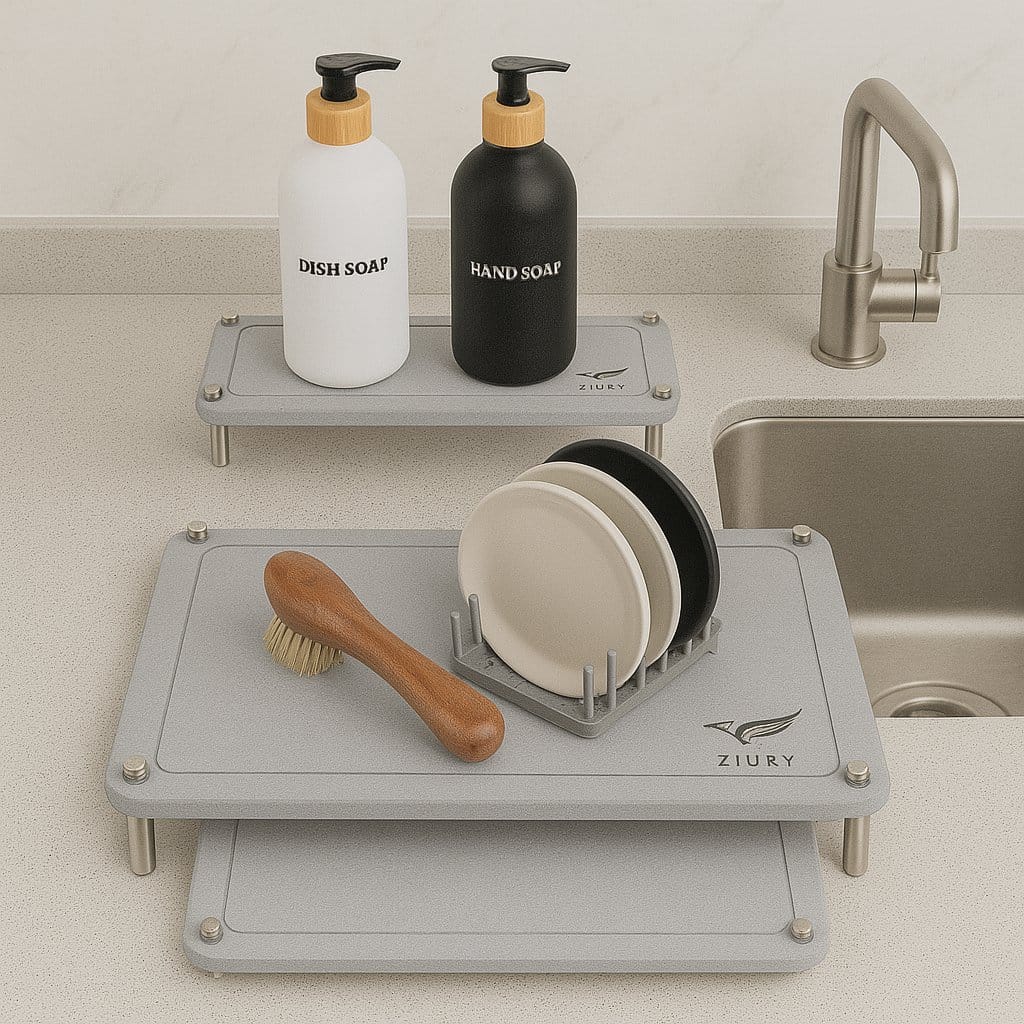
Use two large stone mats with stainless steel legs. One should have slightly higher legs, allowing the smaller one to slide under it. This saves space when not in use and expands when needed.
2. Mini Tray for Dispensers
Use a small stone tray with legs next to the faucet. Place your dish soap and hand soap bottles here. Water won’t pool underneath them anymore.
3. Soap Dispensers
Choose elegant dispensers—like matte black and white bottles with bamboo tops. They match the aesthetic and stay organized on the tray.
4. Optional: Dish Rack
If you use a dish rack, place it over one of the large stone mats. The stone will catch all the dripping water.
This setup keeps everything dry and organized—without plastic trays, soggy towels, or clutter.
Daily Use and Maintenance Tips
You don’t need to be an expert to care for diatomaceous stone. Just follow these tips:
- Don’t scrub it hard: Use a soft brush to clean it.
- Rinse with water once a week or after heavy use.
- Let it air dry after rinsing.
- If it loses absorption after months, lightly sand the surface with fine sandpaper to refresh it.
No machine wash. No special products. Just water, air, and an occasional brush.
Is It Safe?
Yes. Diatomaceous stone used for drying mats is non-toxic and safe for daily use. Some people confuse it with the powdered form used in gardening (which can irritate lungs), but the solid form used in kitchen mats is completely safe.
What to Look for When Buying
Not all stone mats are equal. Here’s what to check before buying:
- Thickness: Thicker mats absorb better and last longer.
- Elevated design: Legs help water dry faster by increasing air flow.
- Neutral tones: These match most kitchens and stay looking clean.
- Set configuration: Some kits include multiple pieces that work together. This is more convenient than buying items one by one.
If you want a complete solution, look for sets with large mats, small trays, and elegant accessories. These are designed to work together and keep your space organized.
Before You Go: Why This Matters
Let’s go back to that messy kitchen scenario. You walk in, and the counters are covered in water. Now imagine the opposite: a clean, dry, modern kitchen that stays that way—all thanks to natural stone. No more soggy towels. No more plastic clutter. Just an elegant kitchen that works for you.
This is more than a drying solution. It’s a lifestyle shift toward simplicity, cleanliness, and function.
Final Thoughts
If you’ve been searching for a way to keep your kitchen dry and bring in a touch of elegance, diatomaceous stone might be exactly what you need. It’s easy to use, natural, and effective. Plus, it looks beautiful on any countertop.
Want to see a complete set in action?
Check out our ZIURV 6-piece diatomaceous stone drying set—designed for style, function, and everyday life. Now available on Amazon’s official website.
Transform your kitchen into a dry, elegant space with ZIURV’s diatomaceous stone set.
✨ Shop Now on Our Store or Get It on Amazon